

Community Improvement Districts (CIDs) and Tax Increment Financing (TIF) districts were created to encourage redevelopment, improve infrastructure and help make projects financially feasible that might not otherwise happen.
That makes sense for aging shopping centers, vacant land or areas in need of revitalization.
But many of Lenexa’s incentive districts are located in busy commercial corridors, established shopping centers, hotels and mixed-use developments that already attract customers every day.
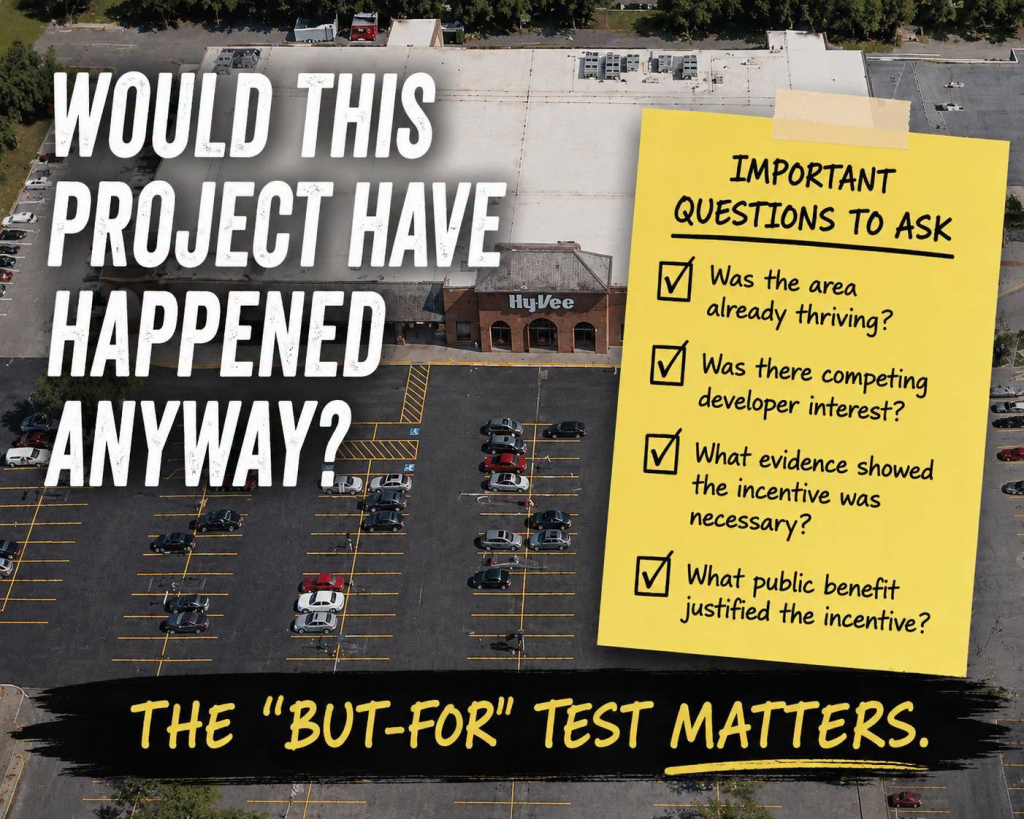
That raises one of the most important questions in economic development: 𝐖𝐨𝐮𝐥𝐝 𝐭𝐡𝐢𝐬 𝐩𝐫𝐨𝐣𝐞𝐜𝐭 𝐡𝐚𝐯𝐞 𝐡𝐚𝐩𝐩𝐞𝐧𝐞𝐝 𝐚𝐧𝐲𝐰𝐚𝐲?
Economic developers often call this the “but-for” test—would the project have moved forward but for the public incentive?
𝐀𝐬 𝐋𝐞𝐧𝐞𝐱𝐚 𝐜𝐨𝐧𝐬𝐢𝐝𝐞𝐫𝐬 𝐟𝐮𝐭𝐮𝐫𝐞 𝐢𝐧𝐜𝐞𝐧𝐭𝐢𝐯𝐞 𝐫𝐞𝐪𝐮𝐞𝐬𝐭𝐬, 𝐭𝐡𝐞𝐬𝐞 𝐚𝐫𝐞 𝐭𝐡𝐞 𝐪𝐮𝐞𝐬𝐭𝐢𝐨𝐧𝐬 𝐰𝐨𝐫𝐭𝐡 𝐚𝐬𝐤𝐢𝐧𝐠:
Was the area already thriving?
Was there competing developer interest?
What financial evidence showed the incentive was necessary?
What public benefit justified the incentive?
When public investment is involved (whether through additional sales taxes or redirected property taxes) residents deserve to understand why an incentive was needed and what the community receives in return.
What do you think? Should development incentives be reserved for projects that truly wouldn’t happen otherwise, or is encouraging new development enough of a public benefit on its own?
Leave a Reply