
What Changed in the 2027 Budget?
Before we get into the deeper questions, it helps to understand the basic structure of Lenexa’s proposed 2027 budget.
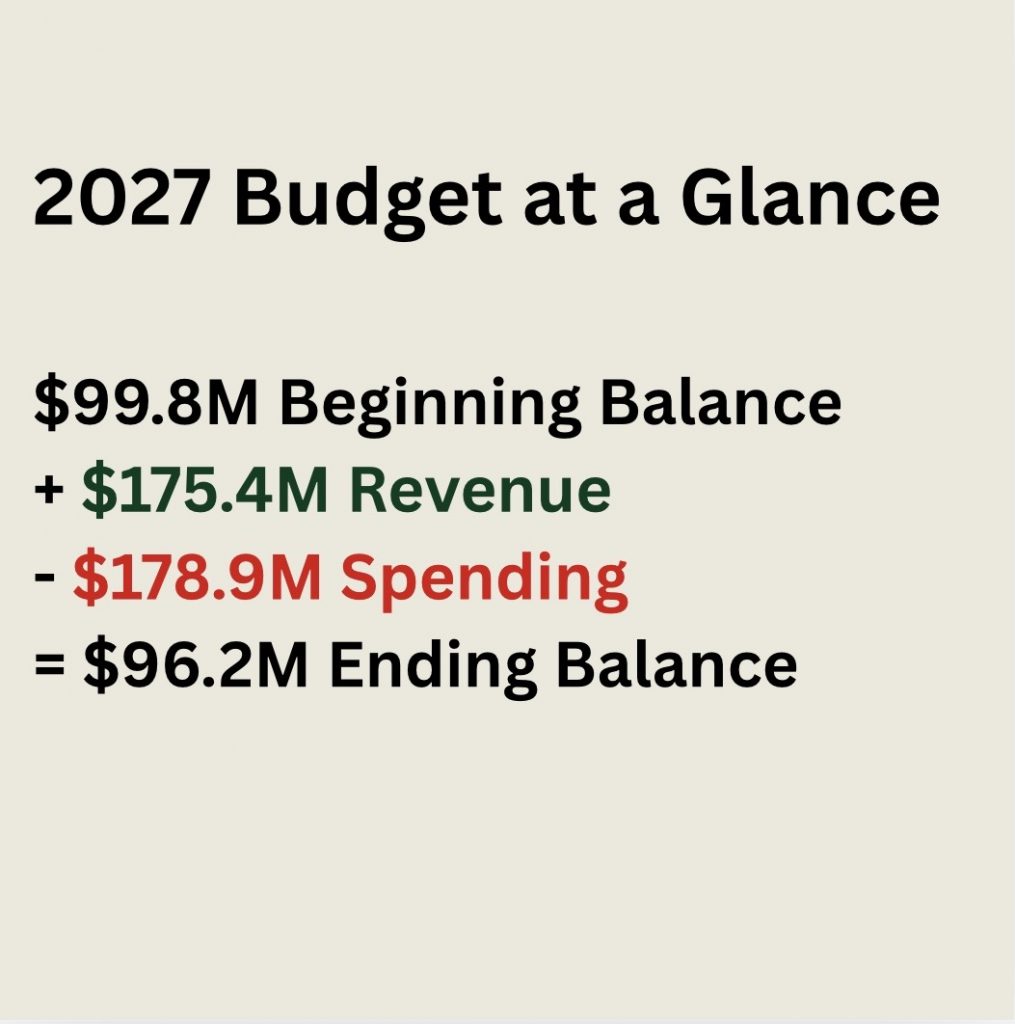
The City expects to begin the year with about $99.8 million in available fund balances, collect approximately $175.4 million in revenue and spend about $178.9 million. That would leave roughly $96.2 million across all City funds at the end of the year.
That does not mean Lenexa has $96 million sitting in one unrestricted savings account. The total includes many different funds, some of which are restricted for debt, stormwater, development districts, capital projects or other designated purposes.
The proposed budget is about 5.6% larger than the revised 2026 budget, while planned expenditures increase by approximately 3.5%. The City notes that a significant portion of the overall increase comes from special-revenue and economic-development funds, including money collected and passed through for CID and TIF projects.
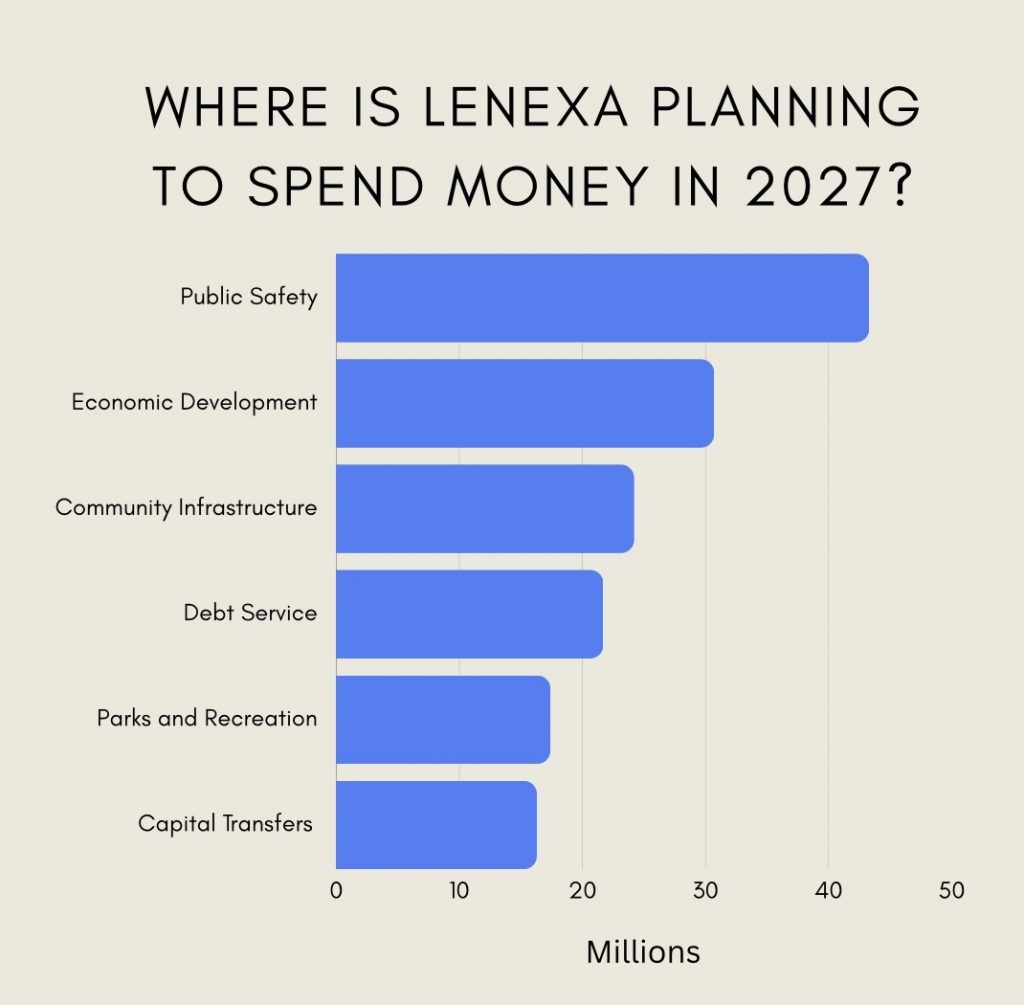
The largest areas of planned 2027 spending include:
- $43.3 million for public safety
- $30.7 million for economic development
- $24.2 million for community infrastructure
- $21.7 million for debt service
- $17.4 million for parks and recreation
- $16.3 million transferred for capital projects
The budget also adds approximately six full-time-equivalent positions, including three in the Police Department, one in Municipal Services and additional staffing in Parks and Stormwater. That is about a 1% increase in the City workforce.
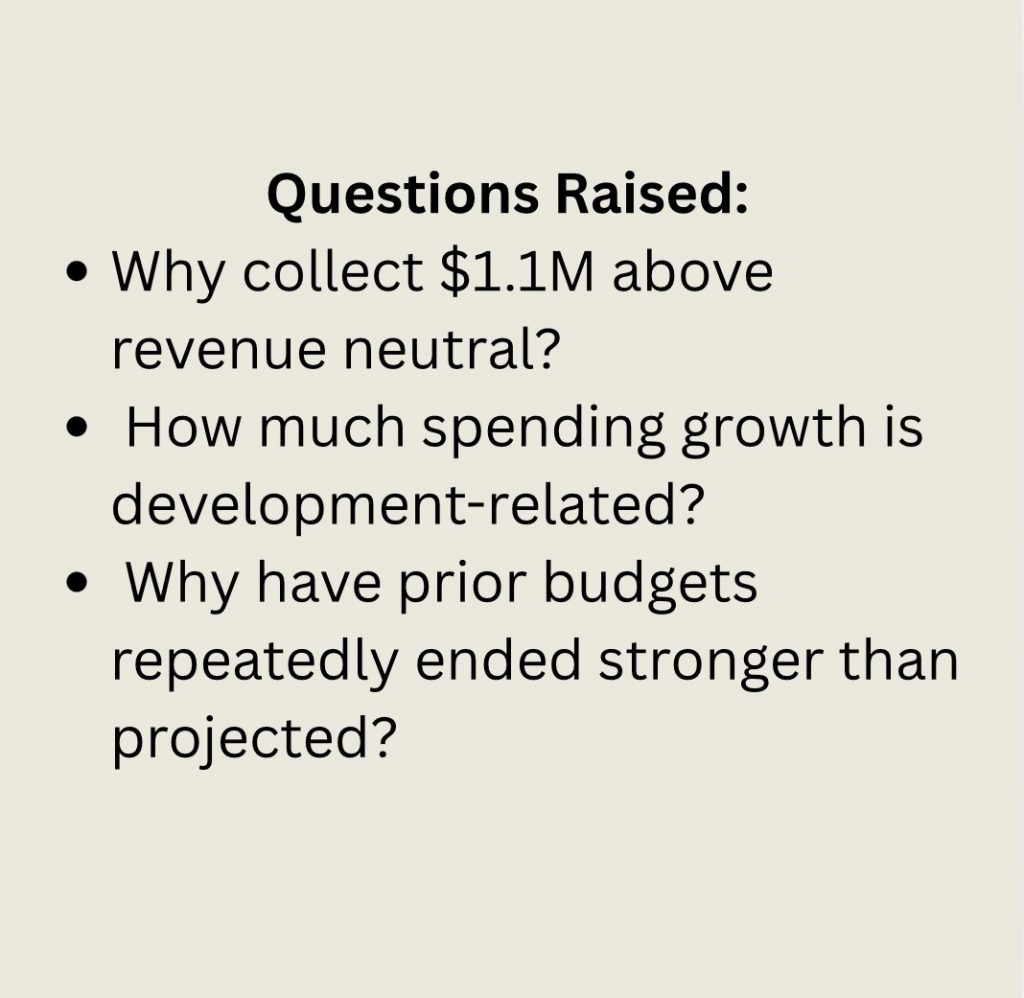
On property taxes, Lenexa is proposing another reduction in the mill levy. But the proposed rate would still exceed the revenue-neutral rate by approximately 0.625 mills, generating about $1.1 million more in property-tax revenue than revenue neutrality would produce.
So the basic 2027 picture is this:
Spending is growing. Public safety and infrastructure remain major priorities. The City continues to reduce the mill levy while collecting more total property-tax revenue as property values increase.
But the headline numbers also lead to the questions we will explore throughout this series:
How much of the budget increase reflects the cost of providing current services?
How much is being directed toward capital projects and development-related spending?
And why is additional property-tax revenue needed when prior years have repeatedly ended stronger than originally projected?
Leave a Reply