
One of the themes that appears throughout Lenexa’s proposed 2027 budget is a conservative approach to revenue estimation.
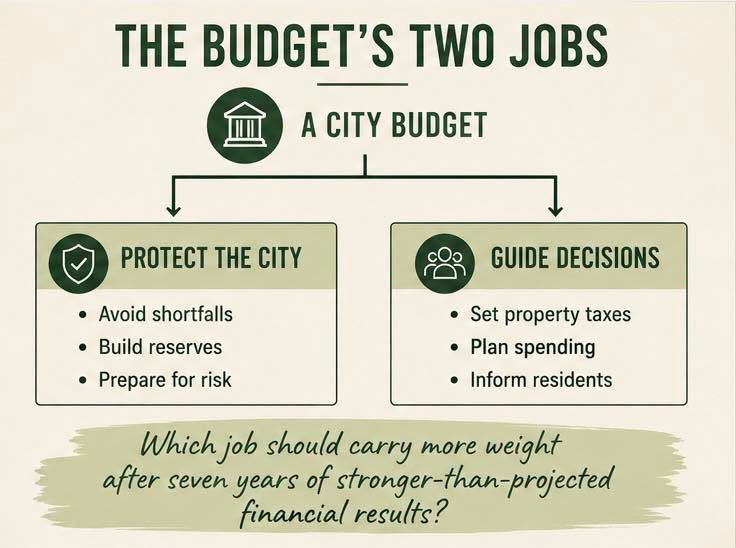
Cities should avoid budget shortfalls, maintain healthy reserves, and be prepared for economic uncertainty. Conservative budgeting has helped Lenexa remain in a strong financial position.
But a budget has another job, too. It helps elected officials decide how much tax revenue to collect.
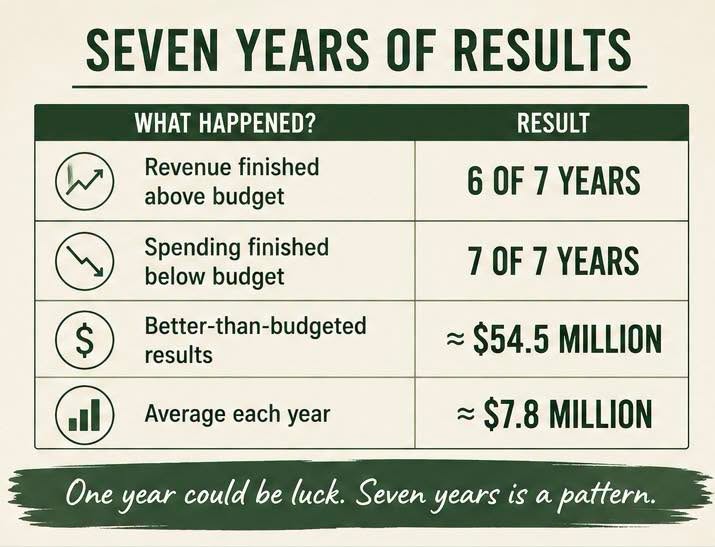
Over the last seven audited years, Lenexa’s actual financial results have consistently been stronger than its budget projected.
Revenue finished 𝐚𝐛𝐨𝐯𝐞 budget in 6 of 7 years.
Spending finished 𝐛𝐞𝐥𝐨𝐰 budget in 7 of 7 years.
𝐂𝐨𝐦𝐛𝐢𝐧𝐞𝐝, 𝐭𝐡𝐞 𝐂𝐢𝐭𝐲’𝐬 𝐟𝐢𝐧𝐚𝐧𝐜𝐢𝐚𝐥 𝐫𝐞𝐬𝐮𝐥𝐭𝐬 𝐰𝐞𝐫𝐞 𝐚𝐩𝐩𝐫𝐨𝐱𝐢𝐦𝐚𝐭𝐞𝐥𝐲 $𝟓𝟒.𝟓 𝐦𝐢𝐥𝐥𝐢𝐨𝐧 𝐬𝐭𝐫𝐨𝐧𝐠𝐞𝐫 𝐭𝐡𝐚𝐧 𝐛𝐮𝐝𝐠𝐞𝐭 𝐚𝐬𝐬𝐮𝐦𝐩𝐭𝐢𝐨𝐧𝐬.
𝐓𝐡𝐚𝐭 𝐰𝐨𝐫𝐤𝐬 𝐨𝐮𝐭 𝐭𝐨 𝐧𝐞𝐚𝐫𝐥𝐲 $𝟕.𝟖 𝐦𝐢𝐥𝐥𝐢𝐨𝐧 𝐩𝐞𝐫 𝐲𝐞𝐚𝐫.
The City has also chosen to exceed the Revenue Neutral Rate each year reviewed, explaining that the additional property tax revenue is needed to maintain services, keep pace with inflation, and serve a growing community.
Those decisions are made before the year begins. They’re based on the budget’s projections. That’s why the forecasting model matters.
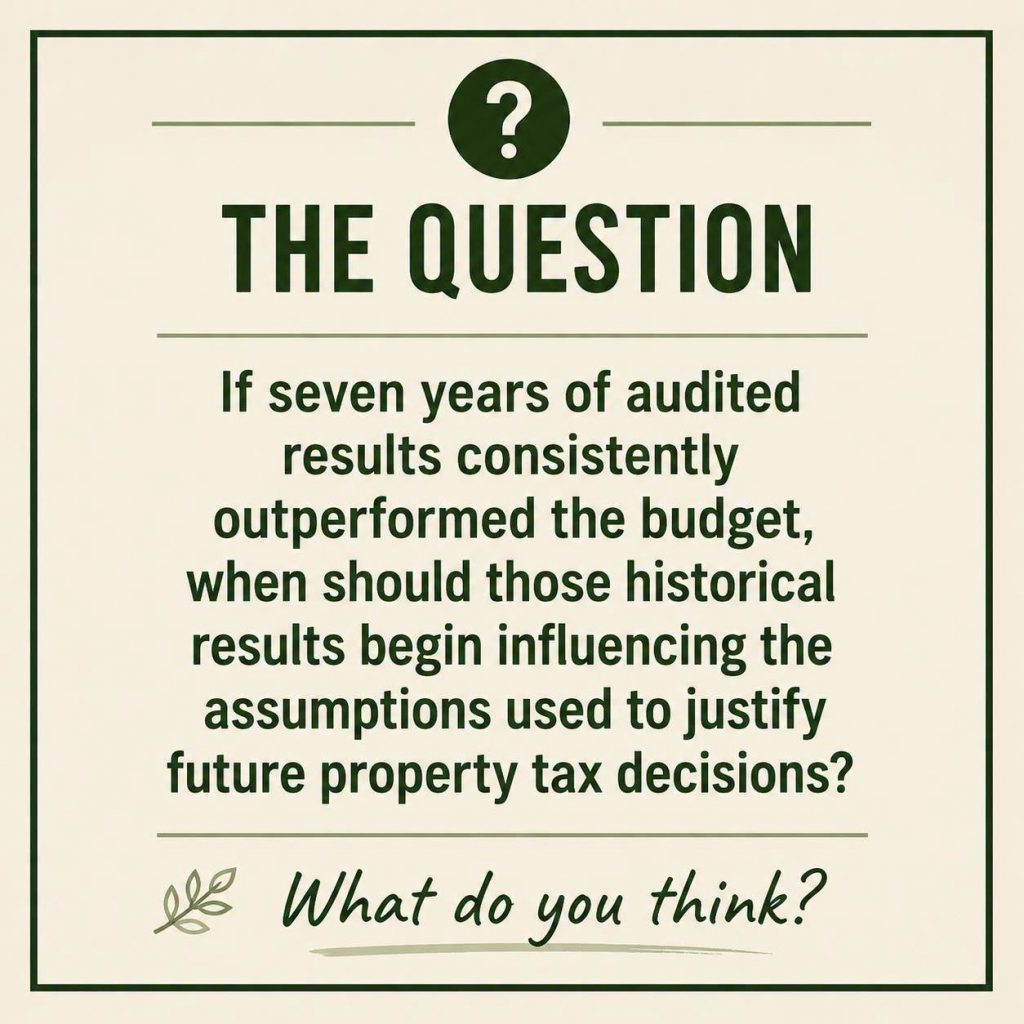
If seven years of audited results consistently finish stronger than projected, should those historical results begin influencing future budget assumptions?
No one expects a budget to predict the future perfectly. But after seven years of actual results moving in the same direction, residents deserve to ask whether the assumptions used to make property tax decisions should be recalibrated.
The question I’d ask:
𝐀𝐭 𝐰𝐡𝐚𝐭 𝐩𝐨𝐢𝐧𝐭 𝐝𝐨𝐞𝐬 𝐜𝐨𝐧𝐬𝐞𝐫𝐯𝐚𝐭𝐢𝐯𝐞 𝐛𝐮𝐝𝐠𝐞𝐭𝐢𝐧𝐠 𝐛𝐞𝐜𝐨𝐦𝐞 𝐬𝐨 𝐜𝐨𝐧𝐬𝐞𝐫𝐯𝐚𝐭𝐢𝐯𝐞 𝐭𝐡𝐚𝐭 𝐢𝐭 𝐧𝐨 𝐥𝐨𝐧𝐠𝐞𝐫 𝐩𝐫𝐨𝐯𝐢𝐝𝐞𝐬 𝐫𝐞𝐬𝐢𝐝𝐞𝐧𝐭𝐬 𝐰𝐢𝐭𝐡 𝐭𝐡𝐞 𝐦𝐨𝐬𝐭 𝐫𝐞𝐚𝐥𝐢𝐬𝐭𝐢𝐜 𝐩𝐢𝐜𝐭𝐮𝐫𝐞 𝐨𝐟 𝐭𝐡𝐞 𝐂𝐢𝐭𝐲’𝐬 𝐞𝐱𝐩𝐞𝐜𝐭𝐞𝐝 𝐟𝐢𝐧𝐚𝐧𝐜𝐢𝐚𝐥 𝐩𝐨𝐬𝐢𝐭𝐢𝐨𝐧 𝐛𝐞𝐟𝐨𝐫𝐞 𝐭𝐚𝐱 𝐝𝐞𝐜𝐢𝐬𝐢𝐨𝐧𝐬 𝐚𝐫𝐞 𝐦𝐚𝐝𝐞?
Leave a Reply