
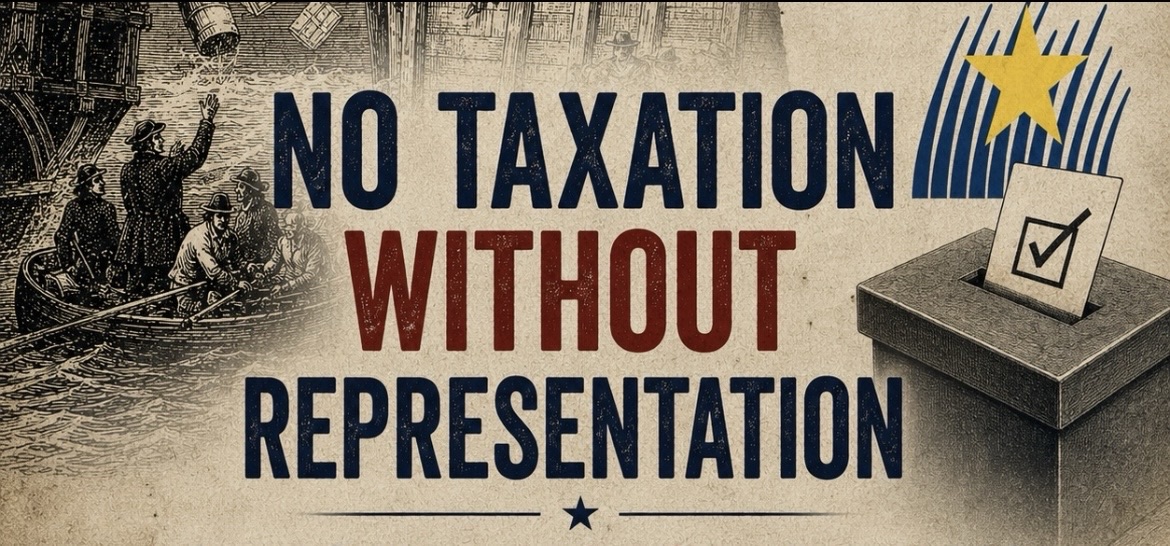
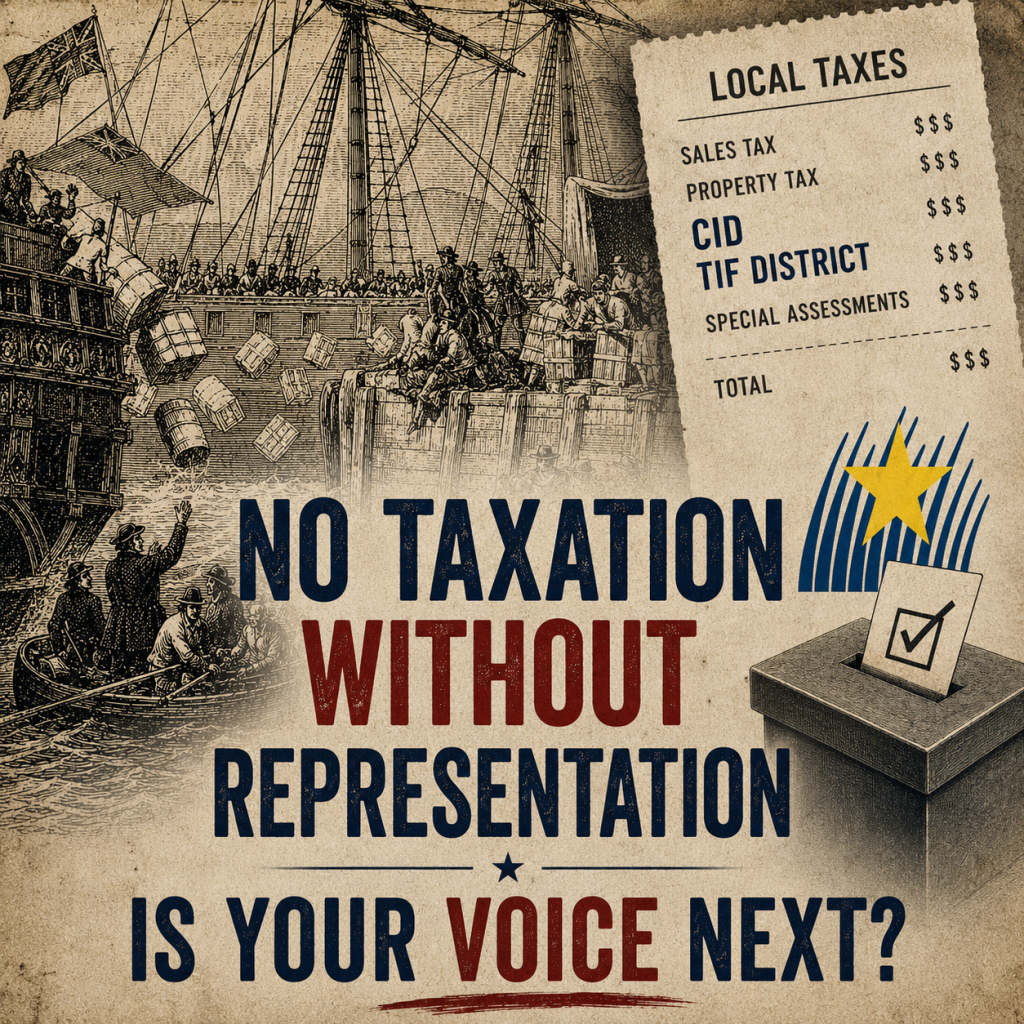
“No Taxation Without Representation.”
Most Americans recognize the phrase. It helped spark the American Revolution and reminds us that taxation and public accountability have long gone hand in hand.
Fast forward nearly 250 years.
Today, you can shop at one business in Lenexa and pay one sales tax rate… then drive a few minutes away and pay a higher rate because you’ve entered a Community Improvement District (CID).
Most shoppers don’t know they’re paying an additional tax. Most couldn’t tell you where those districts are. And many have never even heard the term “CID.”
That’s because these generally aren’t citywide tax increases. They’re location-specific financing tools created through a public approval process to help fund certain development projects.
This series isn’t about telling you what to think about CIDs or TIFs. It’s about helping you understand how they work.
Over the next several posts, we’ll explore:
- Why they’re created.
- Who pays.
- Where the money goes.
- How they’re approved.
- And how they appear in your city’s budget.
Whether you ultimately support these tools or oppose them, every resident deserves to understand how they work, who pays, where the money goes, and how the decisions are made.
Leave a Reply