
On Tuesday night, the Lenexa City Council will consider spending up to $138,424 on a City Center parking study.
Contracting this work out makes sense. Parking studies require specialized expertise. This one will look at occupancy, current and future demand, shared parking, growth projections and whether existing parking can be better managed before additional parking is built.
But the study raises a bigger question: 𝐇𝐨𝐰 𝐝𝐢𝐝 𝐋𝐞𝐧𝐞𝐱𝐚 𝐠𝐞𝐭 𝐡𝐞𝐫𝐞?
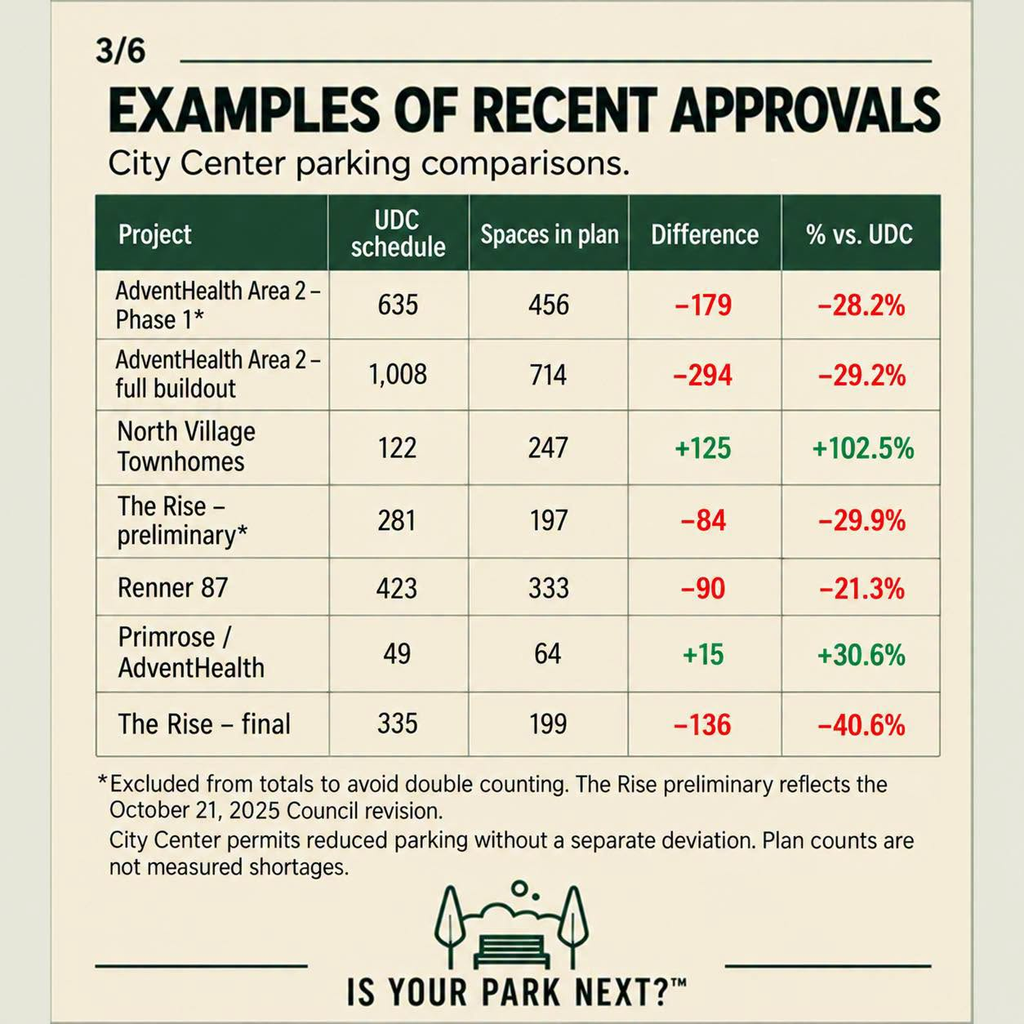
Cities create development standards for a reason. They establish the baseline developers are expected to meet. In City Center, Lenexa has repeatedly approved projects with fewer parking spaces than the normal UDC parking schedule.
That has been intentional. City Center was designed around greater density, mixed uses, shared parking and the idea that people can park once and walk between destinations. There are reasonable planning arguments for that model. Some City Center projects also provide more parking than the normal standard.
But when substantial reductions are approved repeatedly, it raises a question: 𝐀𝐭 𝐰𝐡𝐚𝐭 𝐩𝐨𝐢𝐧𝐭 𝐝𝐨𝐞𝐬 𝐭𝐡𝐞 𝐞𝐱𝐜𝐞𝐩𝐭𝐢𝐨𝐧 𝐞𝐟𝐟𝐞𝐜𝐭𝐢𝐯𝐞𝐥𝐲 𝐛𝐞𝐜𝐨𝐦𝐞 𝐭𝐡𝐞 𝐬𝐭𝐚𝐧𝐝𝐚𝐫𝐝?
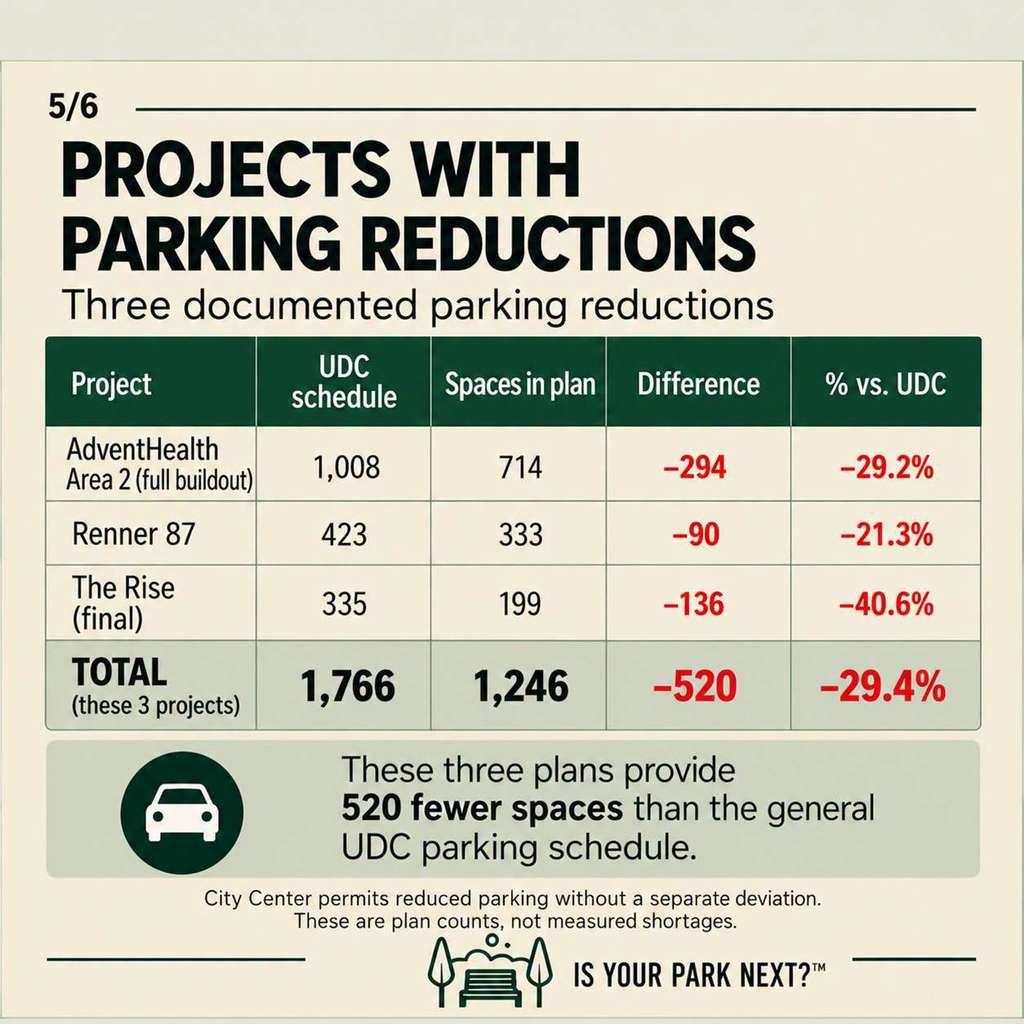
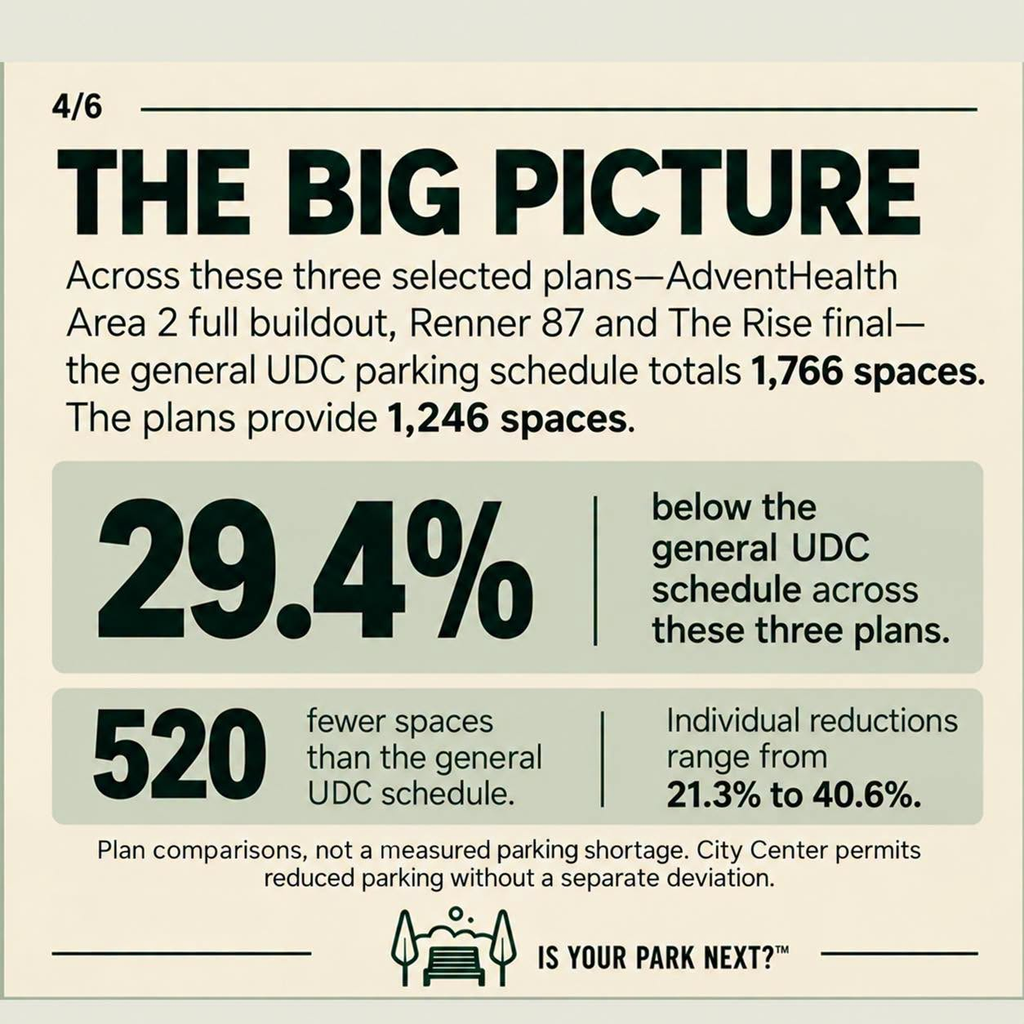
Among three of the larger documented reductions we reviewed, AdventHealth’s full buildout went from 1,008 spaces under the normal schedule to 714. Renner 87 went from 423 to 333. The Rise went from 335 to 199.
Together, those projects provide 𝟓𝟐𝟎 𝐟𝐞𝐰𝐞𝐫 𝐬𝐩𝐚𝐜𝐞𝐬, or 𝟐𝟗.𝟒% 𝐛𝐞𝐥𝐨𝐰 the normal parking schedule.
The study should help show what is actually happening. Is City Center simply growing faster than its parking supply, or have years of approving fewer spaces contributed to the problem?
That leads to the bigger question. If Lenexa approves developments with less parking than its own standards call for, and the City later needs to add parking, who pays for it… the developer or the public?
Leave a Reply