

CID vs. TIF
What’s the difference… and why should you care?
If you’ve ever attended a City Council meeting, you’ve probably heard the terms CID and TIF tossed around like everyone knows what they mean.
The truth? Most of us don’t.
Here’s the simple version.
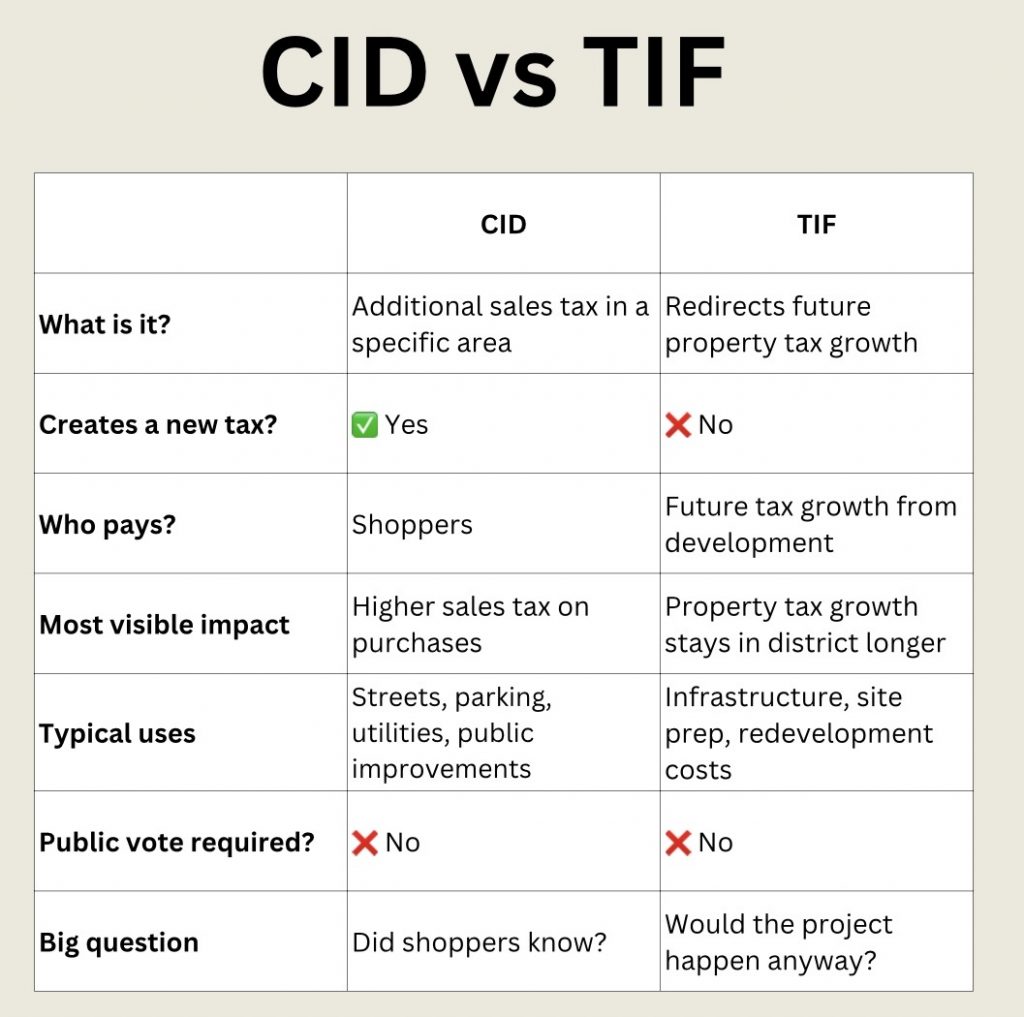
A Community Improvement District (CID) adds an additional sales tax within a specific area. If you shop inside that district, your purchase may include an extra 1–2% sales tax that helps fund eligible project costs like streets, parking, utilities, landscaping, and other improvements.
A Tax Increment Financing (TIF) district works differently. It doesn’t add another tax to your bill. Instead, it redirects the future increase in property tax revenue generated by a new development to help pay for eligible project costs over time.
Both are legal tools used by cities across Kansas. Supporters say they encourage redevelopment, improve infrastructure, and help make projects financially feasible.
Critics argue that CIDs can quietly raise the cost of shopping without a direct public vote, while TIFs can redirect future tax growth away from schools, counties and other public services. They also question whether some projects would have happened without the incentive anyway.
What do you think? Are CIDs and TIFs useful development tools—or are cities relying on them too often?
Leave a Reply