
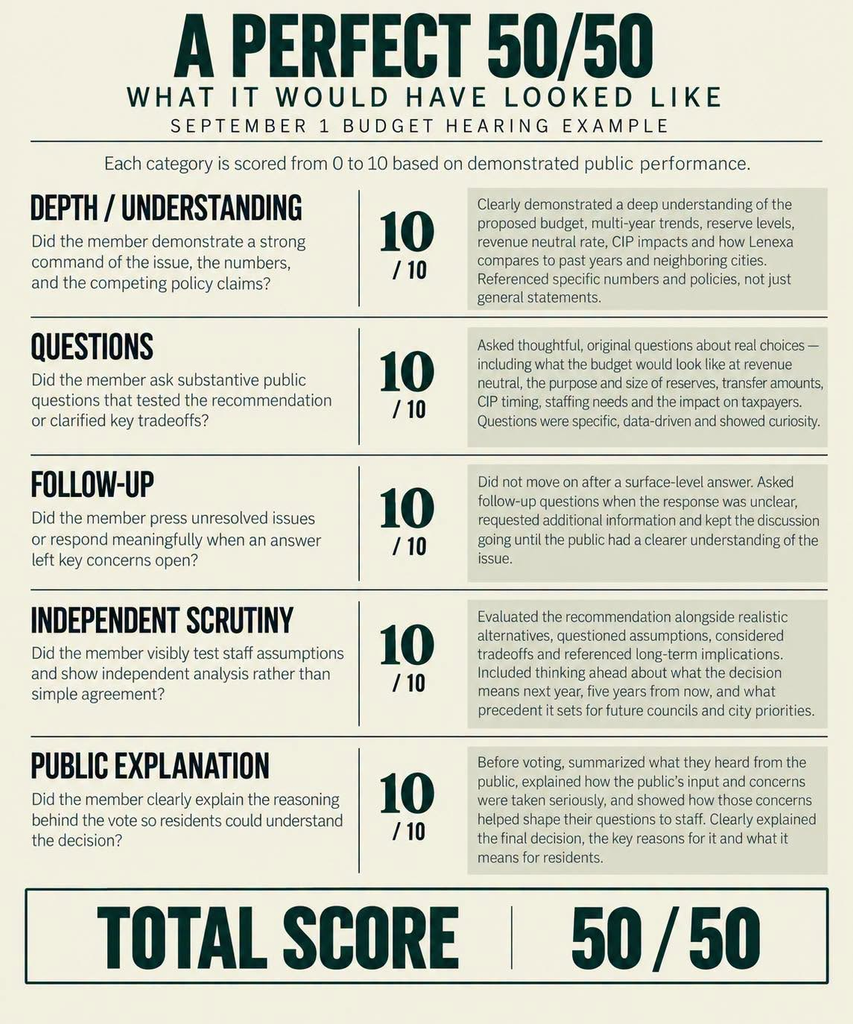
A 50/50 score should be hard to earn. At the September 1 budget hearing, a perfect score would have meant more than understanding the budget and casting a vote.
A councilmember would have acknowledged the concerns residents raised about taxes, reserves, staffing and the amount above revenue neutral. They would have brought those concerns back to the dais and asked staff to address them directly.
They would also raise their own questions. What would the budget look like at revenue neutral? How much of the additional revenue is tied to specific future needs? How do current reserve levels compare with policy and prior years? What happens if revenue projections come in differently than expected?
If an answer left something unresolved, they would follow up.
They would use analytical thinking to compare options and independent judgment to test the recommendation. They would also think ahead: What could this decision mean next year, five years from now, or for future councils? What precedent does it set?
Before voting, they would explain what they heard from the public, what they learned from staff, what alternatives they considered, what risks they weighed and why they chose one path over another.
The public should be able to follow the decision-making process from beginning to end.
A yes vote or a no vote could both earn 50/50.
That should be the standard for public governing from the dais: thoughtful questions, independent judgment and a decision-making process residents can follow and trust from beginning to end.
Leave a Reply