

We’ve spent the last several posts talking about Community Improvement Districts (CIDs). But percentages can be hard to picture, so let’s put one into real dollars.
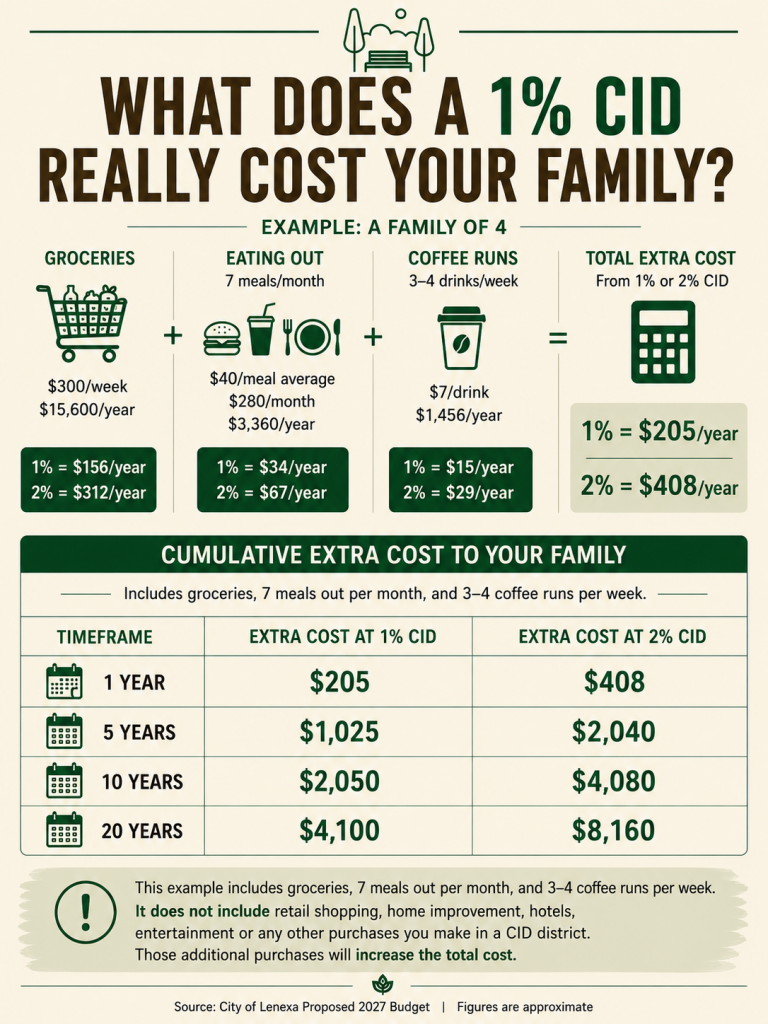
Imagine a family of four spending about $300 a week on groceries. That’s about $15,600 a year.
If that grocery store is in a 1% CID, the family pays about $156 a year in additional sales tax. If it’s a 2% CID, that grows to about $312 a year.
That may not sound like much at first. But over 5, 10 or even 20 years, those dollars start to add up… and that’s from groceries alone.
It doesn’t include eating out, shopping at retail stores, home improvement projects, hotels or any other purchases made inside a CID. In a city like Lenexa with 20-25 CID districts… those numbers can add up quick! Lenexa has tried to develop more “affordable housing” but how does that narrative fit in with these additional CID costs placed on families at nearly every grocery store in the city?
What do you think? If a business is located inside a Community Improvement District, should customers have an easier way to know before they check out?
Leave a Reply