
𝐓𝐡𝐞 𝐂𝐢𝐭𝐲’𝐬 𝐑𝐞𝐬𝐩𝐨𝐧𝐬𝐞𝐬 𝐭𝐨 𝐁𝐮𝐝𝐠𝐞𝐭 𝐐𝐮𝐞𝐬𝐭𝐢𝐨𝐧𝐬
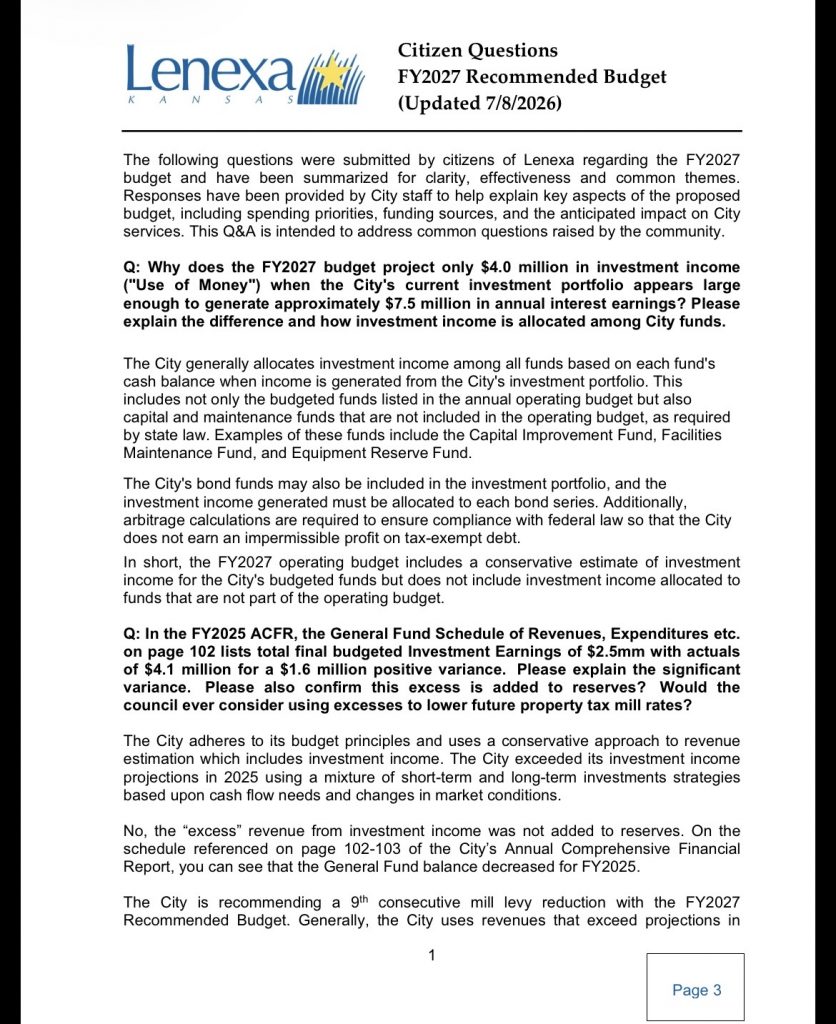
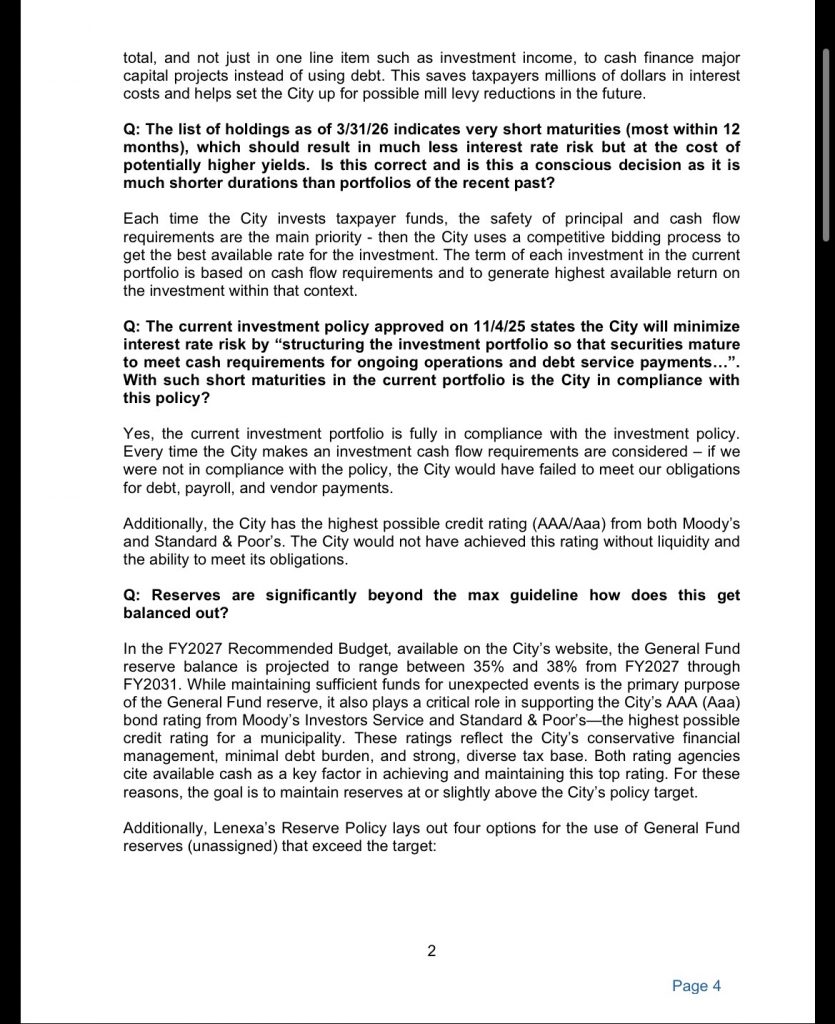
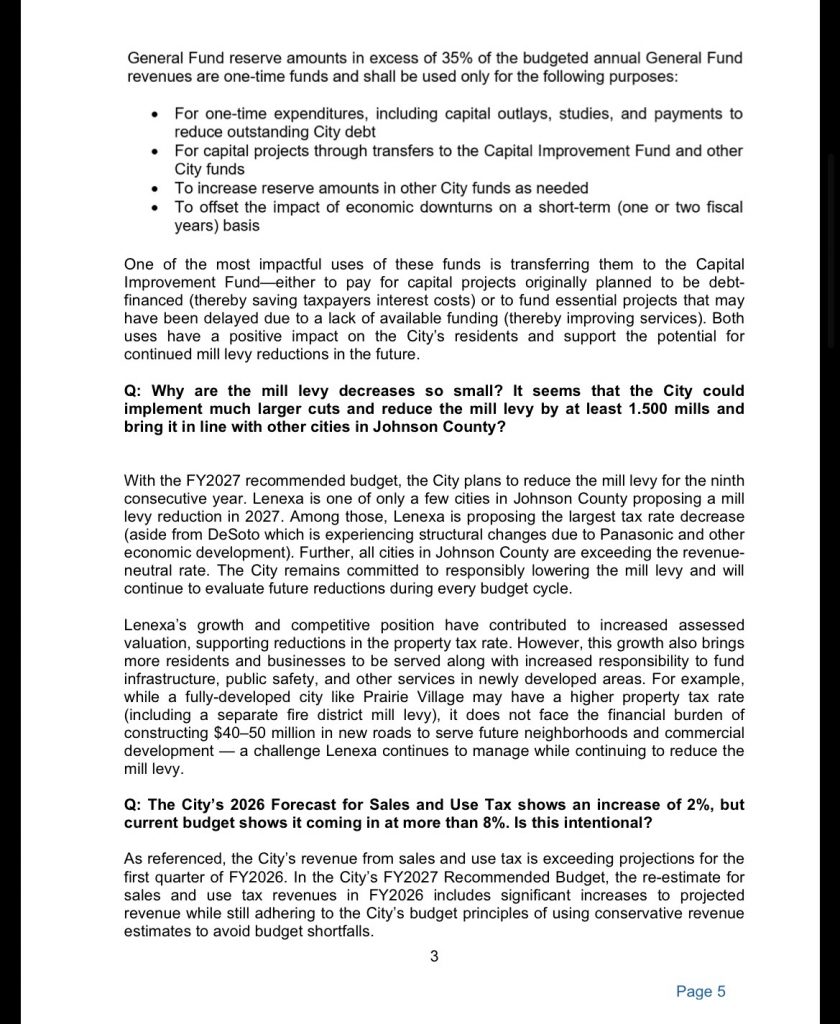
As part of reviewing the proposed 2027 budget, several questions were submitted to City staff regarding reserves, debt, revenue assumptions, growth, and long-term financial planning.
The City’s responses provided some helpful context and in other case evade answering some questions directly. A few themes stood out... these are broad overviews that we will dig into deeper in the coming weeks.
𝐂𝐨𝐧𝐬𝐞𝐫𝐯𝐚𝐭𝐢𝐯𝐞 𝐅𝐨𝐫𝐞𝐜𝐚𝐬𝐭𝐢𝐧𝐠
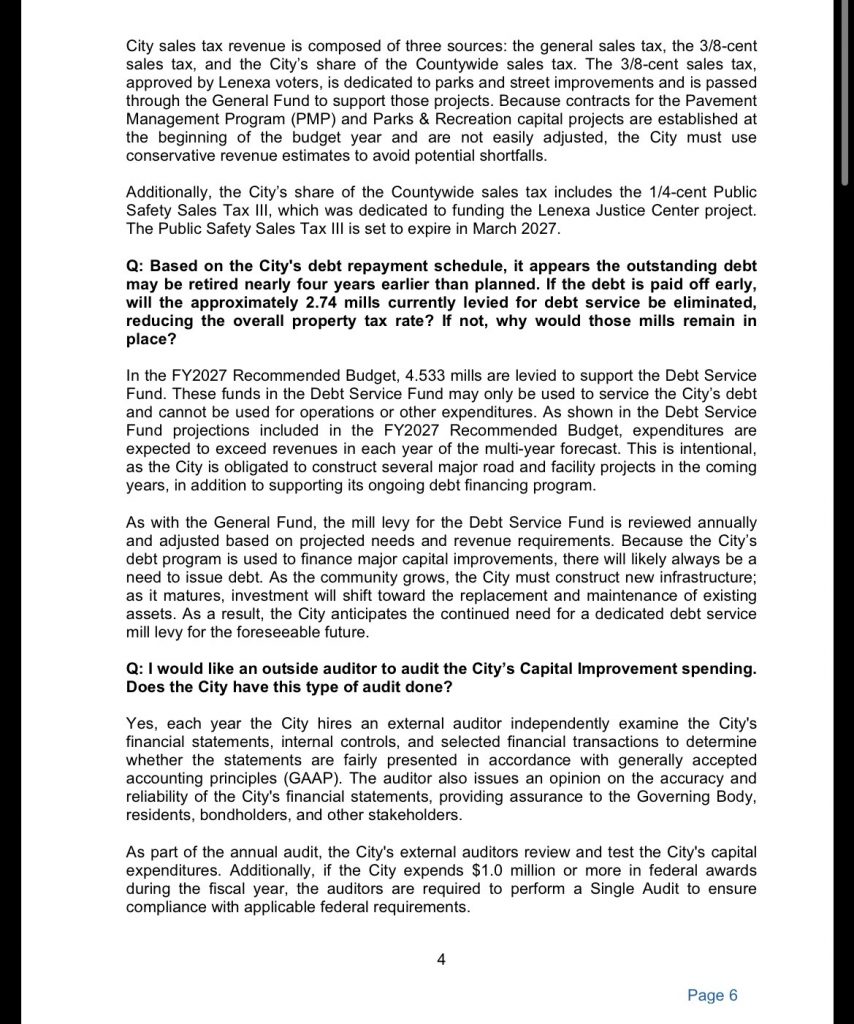
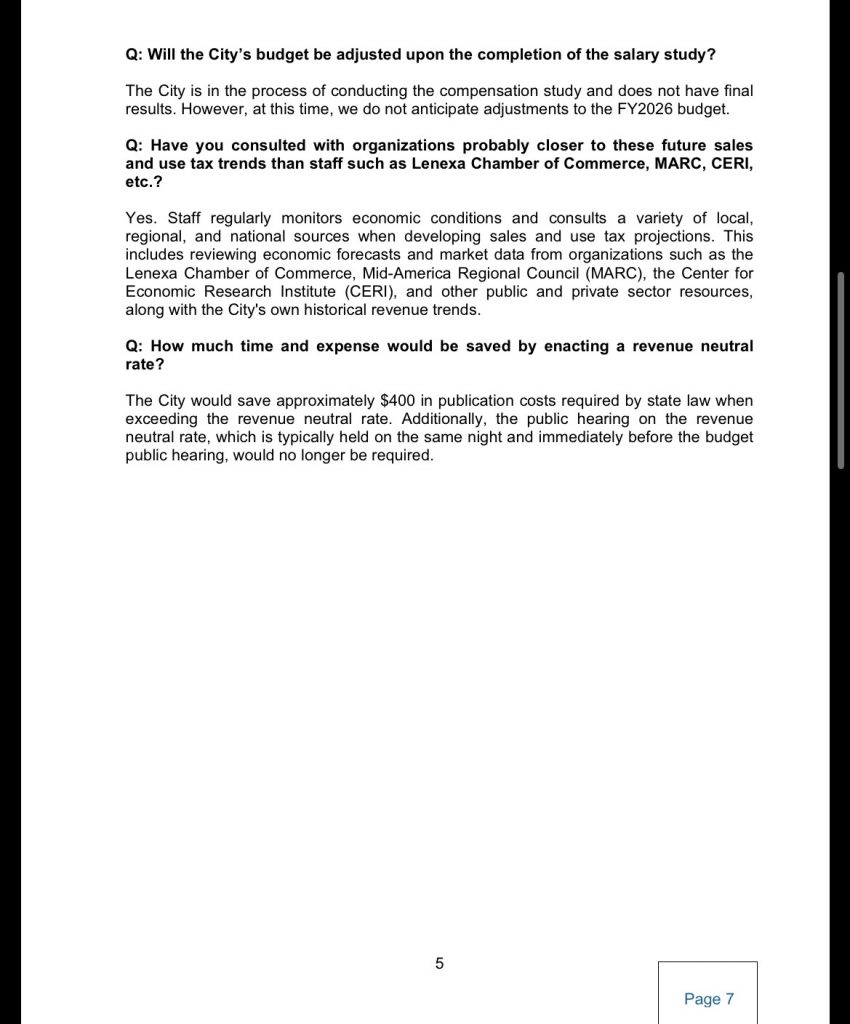
The City stated that it intentionally uses conservative revenue assumptions in order to avoid potential budget shortfalls and maintain financial stability. Staff noted that revenues can fluctuate based on economic conditions, development activity, and other factors.
𝐑𝐞𝐬𝐞𝐫𝐯𝐞𝐬
Staff explained that reserve balances are intended to provide flexibility during economic downturns, support future capital projects, and potentially reduce future borrowing needs. The City also noted that many of these funds have specific purposes or policy requirements and are not simply unrestricted dollars available for spending.
𝐆𝐫𝐨𝐰𝐭𝐡 𝐚𝐧𝐝 𝐈𝐧𝐟𝐫𝐚𝐬𝐭𝐫𝐮𝐜𝐭𝐮𝐫𝐞
One of the more interesting responses acknowledged that Lenexa continues to be a growing community. Unlike more mature cities, Lenexa is still building major roads, parks, stormwater improvements, and other infrastructure that will require long-term maintenance and future investment.
𝐃𝐞𝐛𝐭 𝐚𝐧𝐝 𝐋𝐨𝐧𝐠-𝐓𝐞𝐫𝐦 𝐏𝐥𝐚𝐧𝐧𝐢𝐧𝐠
The City noted that while debt levels fluctuate over time, future infrastructure needs mean debt obligations will likely remain an important part of Lenexa’s long-term financial picture.
Understanding the City’s finances often requires looking at annual budgets, quarterly reports, annual financial reports, capital improvement plans, and economic development reports together.
Over the coming weeks, we’ll continue breaking these documents down and comparing the proposed budget to historical results in an effort to make them easier for residents to understand.
𝐐𝐮𝐞𝐬𝐭𝐢𝐨𝐧𝐬 𝐖𝐞’𝐫𝐞 𝐒𝐭𝐢𝐥𝐥 𝐓𝐡𝐢𝐧𝐤𝐢𝐧𝐠 𝐀𝐛𝐨𝐮𝐭
If actual financial results have repeatedly finished stronger than budgeted, how should residents interpret the assumptions used in future budgets?
Why have actual transfers often been significantly lower than originally budgeted, and how does that impact year-end balances and reserve projections?
How much of the City’s projected reserves are truly available versus already committed to future obligations, capital projects, or policy requirements?
As Lenexa continues to grow, are recurring revenues keeping pace with the recurring costs of maintaining roads, parks, stormwater systems, and public safety services?
How does the City measure whether major investments and development initiatives are delivering the promised public benefit?
What stood out to you?
Leave a Reply