

Lenexa frequently highlights its repeated mill-levy reductions. That is accurate… but a lower tax rate does not automatically mean a lower tax bill.
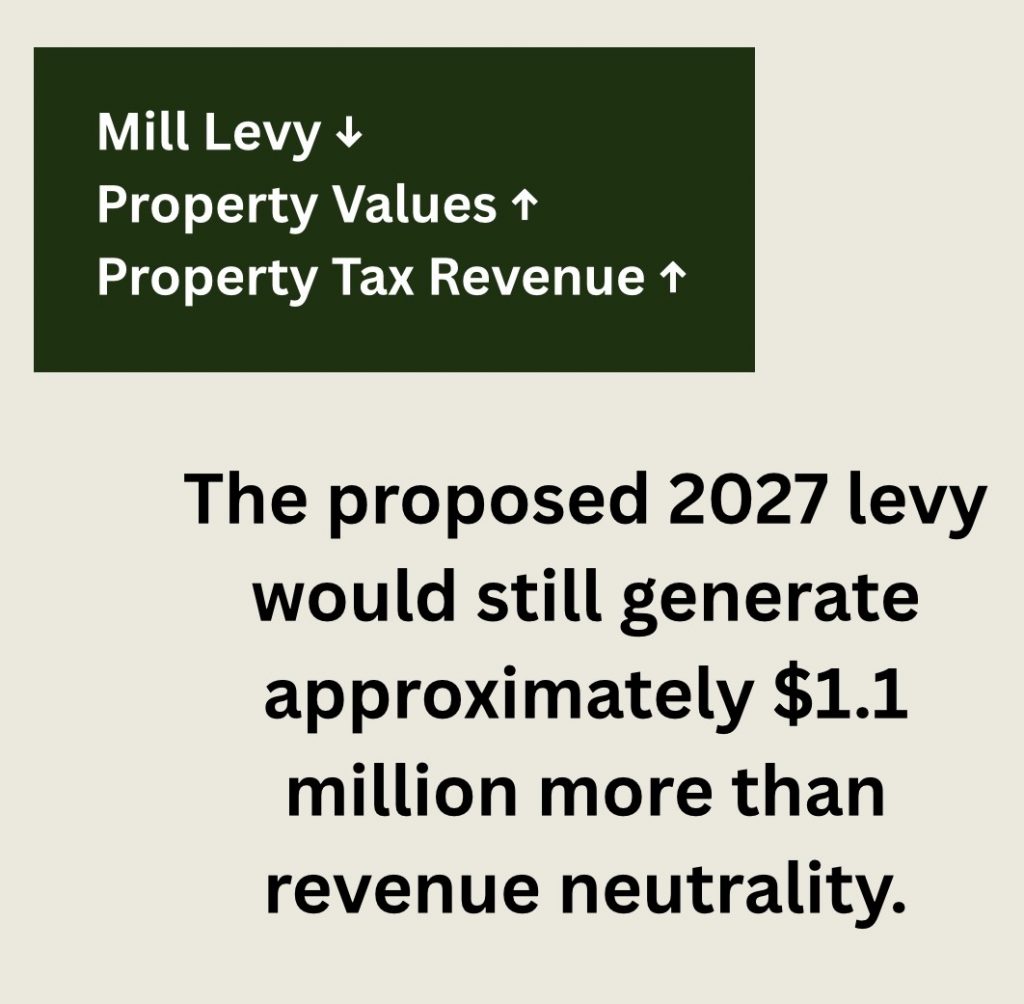
A mill levy is the tax rate applied to a property’s assessed value. When property values rise faster than the mill levy falls, the City can lower the rate and still collect more property-tax revenue.
Lenexa’s own examples show that happening.
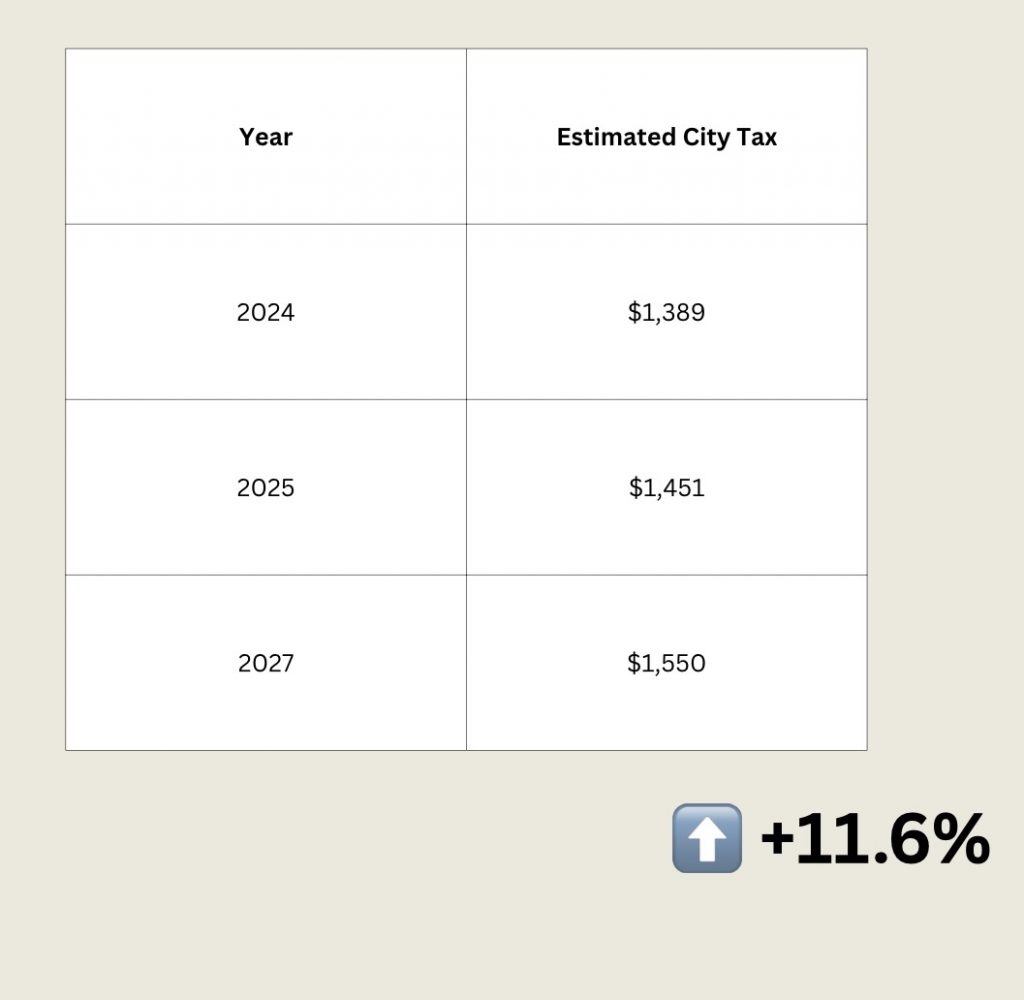
The estimated City property tax on an average-value home was about $1,389 in 2024, approximately $1,451 in 2025, and about $1,550 under the proposed 2027 budget.
So both of these statements can be true at the same time:
- The mill levy went down.
- The average homeowner’s City tax bill went up.
The historical numbers add another layer. Much of Lenexa’s long-term reduction in the total mill levy came from the Debt Service levy, which fell as debt obligations changed. The General Fund mill rate (the portion used to support regular City operations) has not declined nearly as much and remains slightly higher than it was about a decade ago.
That does not make the City’s mill-levy claim false. It does mean residents deserve more context than the rate alone provides.
For 2027, Lenexa is again proposing a lower total mill levy. But the proposed rate would still exceed the revenue-neutral rate, allowing the City to collect approximately $1.1 million more in property taxes than revenue neutrality would generate.
The better measure is not simply whether the rate went down.
It is:
How much more or less will residents actually pay, and how much additional revenue will the City collect?
A falling mill levy can sound like a tax cut. But when property values rise, the taxpayer’s bill may tell a different story.

Leave a Reply