

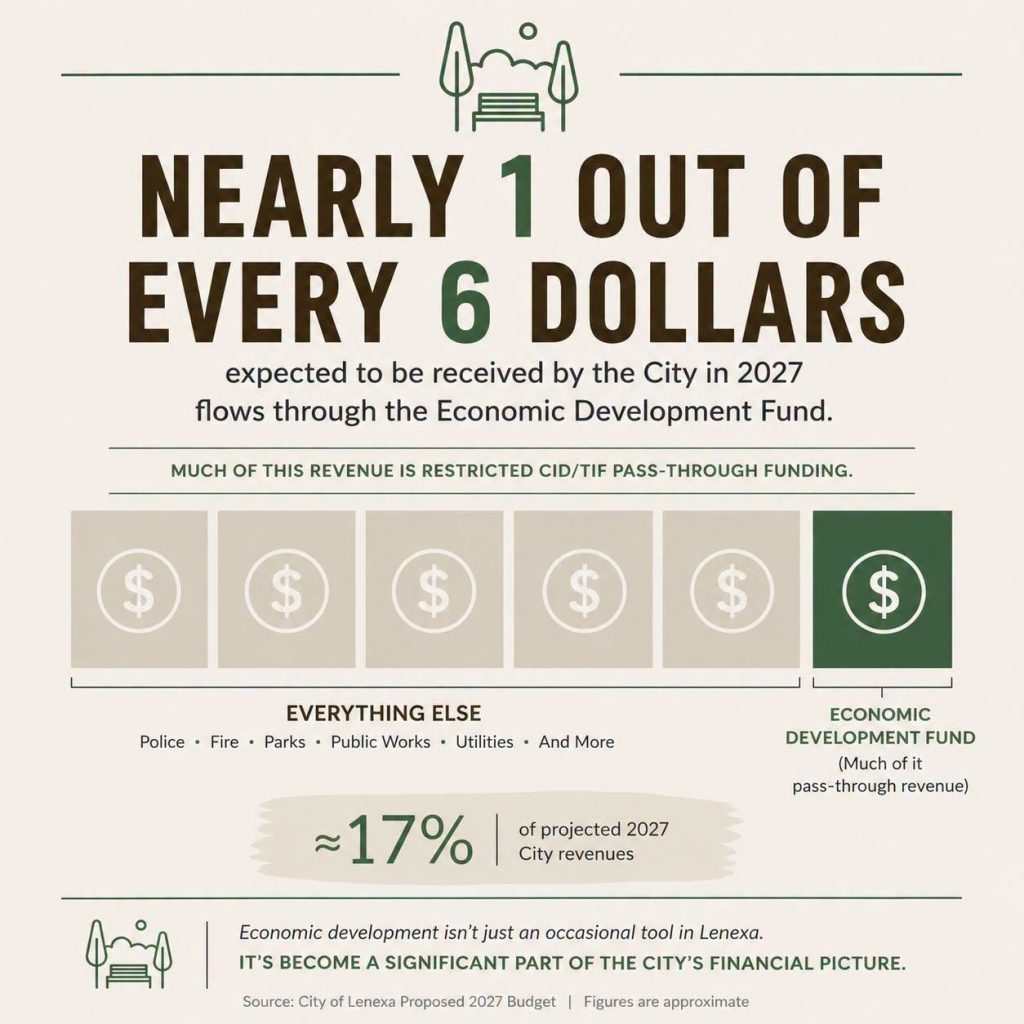
𝐍𝐞𝐚𝐫𝐥𝐲 𝟏 𝐎𝐮𝐭 𝐨𝐟 𝐄𝐯𝐞𝐫𝐲 𝟔 𝐃𝐨𝐥𝐥𝐚𝐫𝐬
Over the last several posts, we’ve talked about what CIDs and TIFs are, where they’re located and why cities use them.
As we have been walking through this CID/TIF series the Budget series has been running as well… which allowed us to evaluate both concurrently. One number immediately caught my attention.
Lenexa expects to receive about $30.7 million through its Economic Development Fund in 2027. Much of that money is tied to CID and TIF districts and flows through the City to reimburse eligible development costs.
𝐓𝐡𝐚𝐭’𝐬 𝐧𝐞𝐚𝐫𝐥𝐲 𝐨𝐧𝐞 𝐨𝐮𝐭 𝐨𝐟 𝐞𝐯𝐞𝐫𝐲 𝐬𝐢𝐱 𝐝𝐨𝐥𝐥𝐚𝐫𝐬 𝐭𝐡𝐞 𝐂𝐢𝐭𝐲 𝐞𝐱𝐩𝐞𝐜𝐭𝐬 𝐭𝐨 𝐫𝐞𝐜𝐞𝐢𝐯𝐞 𝐭𝐡𝐢𝐬 𝐲𝐞𝐚𝐫 𝐩𝐚𝐬𝐬𝐢𝐧𝐠 𝐭𝐡𝐫𝐨𝐮𝐠𝐡 𝐭𝐨 𝐂𝐈𝐃/𝐓𝐈𝐅 𝐝𝐢𝐬𝐭𝐫𝐢𝐜𝐭𝐬.
Now, to be clear, that doesn’t mean one out of every six property-tax dollars is going to developers. Much of this money is legally restricted and can’t be spent on everyday City services like police, parks or street maintenance.
But it does tell us something important. Development incentives aren’t just an occasional tool in Lenexa… they’ve become a significant part of how the City finances growth.
That stood out even more when I realized Lenexa has about the same number (or MORE!) of active CIDs as Overland Park, despite having less than one-third of the population. Shawnee, by comparison, has just two.
These programs play a much bigger role in Lenexa than many residents probably realize. The real cost for families is coming next week.. stay tuned!
What surprised you most during this series?
Leave a Reply